Monthly Archives: May 2012

Pinnacle of the Temple

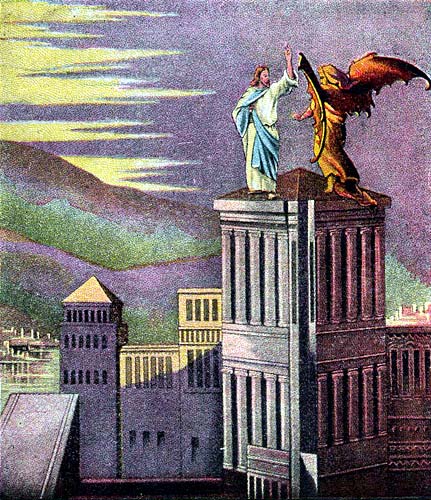
The pinnacle of the Temple was generally considered to be Solomon’s Porch.  It was of marvelous height overlooking the Kidron valley.insomuch that if any one looked down from the top of the battlements, or down both those altitudes, he would be giddy, while his sight could not reach to such an immense depth.” -Josephus Antiquities, Book 15, Chap.11:5

I have often heard that the point of the contest between the devil and Jesus involved trying to fly in order to impress the worshipers.   Instead, I am fascinated by the location of the Kidron valley

The Kidron Valley into which the devil invited Jesus to leap was a important location in Isreali history.  Some believe the distance to have been seven hundred feet.  It was the place where broken idols, unclean things, and the blood of the offerings were disposed of.  It is almost as if Satan wants him to leap into the darkness, by orders of the prince of darkness rather than the victory of the Messiah.
Leave a comment

Filed under Uncategorized

Spit and the High Priest

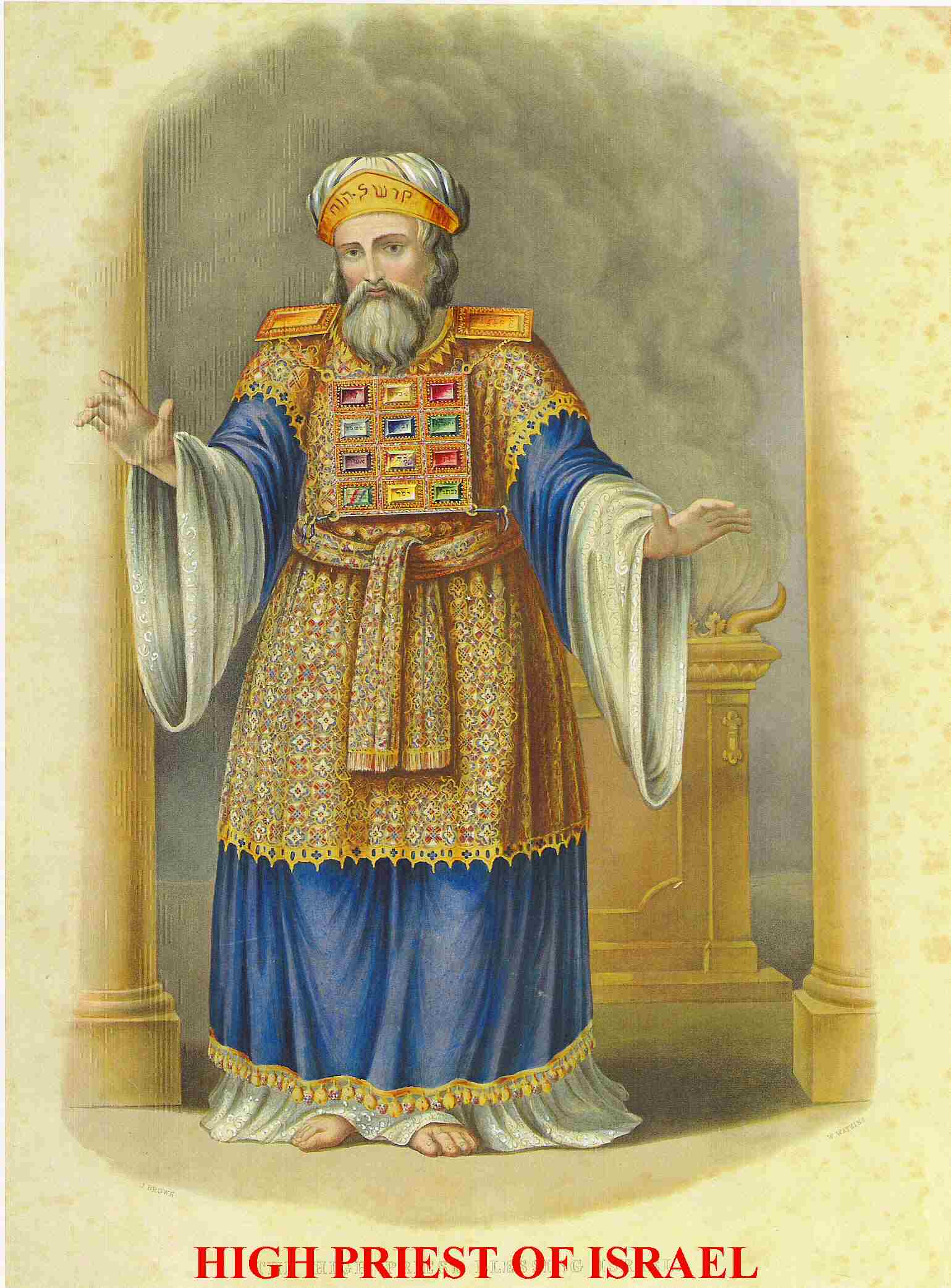
The Jews were rather fixated on cleanliness.  Understandable in a desert people.  The High Priest who was to offer the sacrifice on the day of Atonement was especially watched and examined for anything that could damage his sacrifice.  One interesting incident in Jeremias’ book on Jerusalem, he relates that spittle was unclean and the high priest Simeon in 17 AD was rendered unclean the night before the sacrifice because he contacted the spittle of an Arab.  Another had to take his place.

The Bible is careful to relate that Jesus was spit upon.  That would have rendered him unclean and according to contemporary Jewish law, totally unclean.  Interesting.  I wonder what this has to do with the healing of the blind man.

2 Comments

Filed under Uncategorized

Thirty pieces of silver

Zechariah 11:12-13

English Standard Version (ESV)

12 Then I said to them, “If it seems good to you, give me my wages; but if not, keep them.” And they weighed out as my wages thirty pieces of silver.13 Then the Lord said to me, “Throw it to the potter”— the lordly price at which I was priced by them. So I took the thirty pieces of silver and threw them into the house of the Lord, to the potter.

Thirty pieces of silver is the price Zechariah got for his work. He takes the coins and throws them “to the potter”.  In , 30 pieces of silver was the price of a slave.

When the chief priests decide to buy a field with the returned money, Matthew says that this fulfilled “what was spoken by Jeremiah the prophet.” Namely, “They took the thirty silver coins, the price set on him by the people of Israel, and they used them to buy the potter’s field, as the Lord commanded me” (Matthew 27:9–10).

Jeremiah 32

Exodus 21:32

English Standard Version (ESV)

32 If the ox gores a slave, male or female, the owner shall give to their master thirty shekels of silver, and the ox shall be stoned.

The coins may also be defining “Jesus’ death is a ransom, the price paid to secure a slave’s freedom,” and that the use of the blood money to buy a place to bury the rootless (Matthew 27:7) may hint at the idea that “Jesus’ death makes salvation possible for all the peoples of the world.

There may also be a reference here to the Cain and Abel story where the older brother kills his younger and the bloody field cries out to God.

Leave a comment

Filed under Uncategorized

The Houses of Jerusalem


According to Edersheim in his book on the temple, the houses in Jerusalem were considered to belong to God.  On an event like Passover, travelers could come to Jerusalem and knock on a door and ask for a room.  The resident of the house, if he had room, was obligated to take them in.  After all, it was not his house, but God’s.

This information, although interesting, is perhaps much more important than we are aware.  We feel like we own things and sharing is voluntary.  The Bible and the Biblical tradition seem to teach that our clothes, our food, our homes, our transportation, our church buildings belong to God on a very temporary loan.  If our brother has need and we have what he needs in our possession, we are not being generous in giving it to him, but good stewards.  Often, we understand that good stewards means that we lock our doors and are more than a little careful when handing out God’s possessions.

Leave a comment

Filed under Uncategorized

Luther’s wager

There is a long and somewhat monotonous argument in religious communities about the meaning of the verse in Isaiah which prophesies that a virgin shall conceive and bear a child.  Some folks think that the word should be translated as “young woman.”  Forgetting for a moment the rather obviousness of a saying that a young woman would bear a child, the verse has been used to question the link to Mary’s pregnancy as a miraculous event.

Apparently, the battle has been rather lengthy.  At one point, Martin Luther was questioned or perhaps challenged on the point.  According to the story, Luther dumped a palmful of money on the table or podium and announced that it belonged to anyone who could find an instance in ancient literature in which the word does not apply to a virgin.  The tradition is that the prize was never collected.  The word is used several times elsewhere in the Bible, but never to a girl old enough to have a child.

Interesting.

Leave a comment

Filed under Uncategorized

The Cross

Most of the pictures of the cross are very misleading.  The cross is a towering structure with the crosspiece fastened in an indeterminate way.  If he carried it, how could it fit so neatly in the space between the top and the bottom vertical beam.  The actual cross was T shaped.  The Romans needed something simple because of the number of crosses they needed to execute folks.  Six thousand of the followers of Spartacus were crucified along the highways of Italy.

The prisoner was crucified naked, with his legs folded up under him so that his heels were against his rump.  Often a nail was positioned behind him so that each movement was further agonizing.  The cross was supposed to be lower than the people who viewed the crucified person.  It was easier to mount him on the cross that way and also everyone who passed could look down on him rather than up to him.  A fine point of Roman etiquette.

When someone mentioned to me that the crucifixion in the movie “The Passion of Christ” was too gruesome, it struck me that we have little idea how much he suffered for us.

Leave a comment

Filed under Uncategorized

Behold the Man Pryor Session 3

This particular lecture on DVD focuses on the names of God and His earthly son.

The Naming of the Child

Jesus was born in the Galilee.  When Jesus was growing up, the Galilee was being ruled by Herod Antipas, the son of Herod the Great, a cruel tyrant whose domain was just the western Galilee.  The principal cities were Sepphoras,  Capernaum, and Tiberius.

The child was “given the name” Yeshua, Jesus, which meant that he would save his people from their sins, an interesting name.  The people of Galilee were looking for deliverance from the avarice of Herod, who, along with the leaders of Jerusalem taxed people by removing up to 50% of their income.  This in a land where even the whole of their income was barely enough to keep them alive.  A name in those days was a belief in the probable purpose, character, destiny, or identity of the child.  If that changed, the name was often changed.

Leave a comment

Filed under Uncategorized

The Temple Edersheim 1

The Temple site is deeply rooted in Biblical history.  The geography of Jerusalem is interesting.  On Mountain Moriah Abraham and Isaac carried out the Akedah.  The Akedah is one of the keys of  both the Jewish and Christian faiths.

In Genesis 22, God orders Abraham to offer his son Isaac as a sacrifice.  After Isaac is bound to an

altar, the angel of God stops Abraham at the last minute, saying “now I know you fear God.” Abraham sees a “sacrificial ram held captive by some nearby bushes and he sacrifices the ram instead of his son.

According to many authorities, Isaac was well able to resist his aged father.  He must have climbed on to the altar voluntarily.  A Messianic foreshadowing?

Leave a comment

Filed under Uncategorized